
Understanding Ongoing Headaches in Kids

If you’re here, chances are your child has had more headaches, tummy aches, or mysterious “off days” than feel normal — and you’re wondering where to even begin.
That was us.
For a long time, my daughters symptoms didn’t look dramatic on paper. They weren’t always severe, and they didn’t fit neatly into a diagnosis. But they were persistent, disruptive, and confusing, especially because she’s otherwise a bright, active, sensitive, joyful kid.
BTW, This blog is not medical advice. Just putting that out there 😘
My daughter has had recurring headaches / migraine-like episodes since she was 5. Over the years, the “shape” of them has been consistent:
Head pain that builds gradually (not always sudden)
Often paired with stomach discomfort and nausea
vomiting
Then the crash- fatigue, needing lots laying down with a cold pack, and a emotionally sensitive nervous system afterward
Sometimes an episode is a few hours. Sometimes it stretches into multiple days. And that’s been the hardest part, it’s honestly not just the pain. It’s the disruption to her life- school, plans, sleep, confidence, emotional wellbeing…
But as her mom, I knew this wasn’t nothing.
Biggest Tip That Helped Me First…
Zoom out before You zoom in. Keep a pattern journal.
When your child is dealing with recurring pain, it’s easy to swing between two extremes:
“It’s probably fine.”
“Something is really wrong.”
The truth is usually somewhere in the middle.
One of the most helpful shifts for us was moving from panic mode to pattern mode. Instead of trying to solve it in one week, we started paying attention to:
How often is this happening?
What tends to come before it?
What makes it worse?
What helps her recover?
If you’re new to navigating headaches, my biggest encouragement is don’t start with the rare diagnosis rabbit holes. Start with the pattern your child is showing you.

Foundations First!
this is where most families should start
Before we went deeper, we started with basics. These foundations matter so much for kids navigating headaches!
What we focused on:
Minerals (especially magnesium)
Magnesium was one of the most impactful supports for us over time, particularly for nervous system regulation, muscle tension, and migraine-type patterns.
Rather than relying on just one form, we rotated gentle options depending on what her body tolerated best at the time:
Epsom salt baths (simple, calming, and helpful on high-symptom days)
Topical magnesium like Ancient Minerals lotion
Jigsaw MagSoothe (especially helpful for evening support)
Gaia Pro Liquid Magnesium (easy to adjust dose when needed)
Topicals were often better tolerated than oral forms, especially during active headache cycles.
👉 Helpful note: You can create a free account in my dispensary to view the mineral products we’ve personally used and loved.
Wellness Dispensary
Electrolytes (because hydration alone didn’t always cut it)
We learned pretty quickly that “just drink more water” wasn’t enough.
When headaches were brewing, her body seemed to need minerals + fluids together, not one or the other.
Electrolytes helped with:
headache prevention
fatigue
post-episode recovery
overall resilience during illness or busy weeks
We focused on clean options without excess sugar or artificial ingredients and used them more consistently during:
travel
illness
busy school weeks
hot weather
post-headache recovery
A few of our favorites we are never without that you can find in my wellness dispensary.
Bodybio E-Lyte, Quinton Isotonic, Tri salts( Ecological Formulas)
👉 Helpful takeaway: If your child is drinking water but still struggling, electrolyte balance may be missing.
Protein + Blood Sugar Stability
Skipped meals often led to headaches
Long gaps without protein increased nausea and emotional crashes.
Headaches were more likely late morning or late afternoon if blood sugar dipped
Simple changes helped:
Protein with breakfast ALWAYS
Balanced snacks (protein + fat, not just carbs)
Avoiding long stretches without food on busy days- We did not go longer than 2-3 hours between meals
B Vitamins (especially B2 / riboflavin)
Riboflavin (B2) is one of the more researched nutrients for pediatric migraine patterns, and it ended up being an important piece for us.
We didn’t rush it or mega-dose( serisoully started with a little less than 1/16TH!)
B vitamins helped support:
energy production
nervous system resilience
migraine threshold
We liked this B2 powder and mirco dose measuring tools.
Liver Support (Often Overlooked)
The liver plays a major role in clearing histamine, inflammatory byproducts, and stress hormones. When a child’s system is already under load, that clearance can slow down, which can contribute to headaches lingering or cycling.
For us, we weren’t nesccarly trying to “detox.”
It was about supporting normal clearance so her body wasn’t holding onto more than it needed to.
What that looked like:
prioritizing hydration and electrolytes( see above)
regular bowel movements
bitter foods or incorporating bitters before meals. We created these low histamine bitters that are yummy!
Castor oil packs. Hot tip- add a little over the liver before a warm relaxing bath and forget the wearable pack
Airway & Oral Function
This wasn’t the first thing we looked at, and honestly, it’s something I wish had been on my radar earlier.
The airway, jaw, and nervous system are deeply connected. When breathing mechanics are off, even subtly, the body can stay in a low-grade stress response, especially in sensitive kids.
For us, this opened up a helpful conversation:
Is she getting adequate oxygen at night?
Is her tongue resting where it should?
Is her jaw working harder than it needs to?
Is chronic tension contributing to head and neck strain?
👉 Helpful takeaway: A child doesn’t need obvious snoring or severe sleep issues for airway function to matter.
If this is new territory for you, I created a educational resource to help parents start this conversation
I’ve also leaned heavily on the work and support of my colleague and partner Catherine Kangas — whose resources and services do an incredible job of connecting airway health, nervous system regulation, and whole-body support in a way that feels approachable and grounded.
Catherine Knagas resources/services
When Do You Look Deeper? (Red Flags Parents Should Know)
Most headaches in kids are benign — but there are times deeper evaluation is appropriate.
Consider asking about further evaluation if headaches:
Wake your child from sleep
Are consistently worsening or changing
Are paired with neurological changes (vision, balance, weakness)
Come with frequent vomiting unrelated to illness
Don’t respond at all to foundational support
For us, we chose an MRI without contrast to rule anything out and give us peace.
The Nervous System Piece (This Is Where Things Started to Click)
We started noticing that headaches often followed:
Excitement
Travel
Busy days
Screens
Emotional overwhelm
Not just stress — stimulation.
We stopped seeing headaches as isolated events and started seeing them as signals of nervous system overload.
And once we understood why that happens, especially in sensitive kids — so much clicked.
Highly Sensitive Nervous Systems Are Wired Differently
My oldest is what’s often referred to as a Highly Sensitive Child (HSC). This isn’t a diagnosis. It’s a nervous system disposition, and learning about it completely changed how we parent her.
Highly sensitive kids tend to:
process sensory input more deeply
feel emotions more intensely
notice subtle changes others miss
have a lower threshold for overload
This doesn’t mean something is “wrong.” It means their nervous system takes in more informatio, much faster, and needs more time to reset.
This reframed so much. She’s not the kid who can:
go to a loud birthday party
follow it with a soccer game
eat on the run
stay up late
and bounce back the next day
Her system simply doesn’t work that way.
Why Overstimulation Can Trigger a Headache or Tummy Ache
For sensitive kids, overstimulation doesn’t just feel overwhelming emotionally — it’s physiological.
Here’s what’s happening underneath:
Sensory input (noise, light, screens, activity) increases nervous system demand
Emotional processing adds another layer of load
Physical stressors (dehydration, hunger, sugar, illness) stack on top
The brain’s energy centers (mitochondria) have to work harder to keep up
When that demand outpaces supply, the system looks for a release valve.
In simple terms: the bucket overflows.
The headache isn’t the problem — it’s the body’s way of forcing a pause.
And This Is Where It Gets a Little Nerdy (But Stay With Me)
Over time, we noticed something we couldn’t ignore.
Her headaches didn’t feel random. They came in waves , often every 8 to 14 days — almost like her body would slowly build tension, tip over, crash, recover… and then start building again.
Once I saw that pattern, I stopped asking “What caused this one?”
And started asking “What’s her system carrying overall?”
Because cycles usually don’t mean one bad trigger.
They usually mean a body that’s struggling to regulate.
HELLO Mast Cells & Histamine 🙃
Here’s where the nervous system piece suddenly clicked
Highly sensitive nervous systems don’t just process sensory and emotional input differently. They also interact more intensely with the immune system, especially mast cells.
Mast cells aren’t just about allergies.
They’re immune “sentinels” that live close to:
nerves
blood vessels
the gut
the brain
And they release histamine and other inflammatory mediators in response to stress, not just pollen or food.
In other words:
a nervous system under chronic load can signal mast cells to activate, even in the absence of traditional allergies.
That connection helped explain why excitement OR emotional stress could trigger a headache
The body wasn’t reacting to “something bad.”
It was reacting to internal load.
I want to be careful here tho, because histamine gets villainized online! Histamine isn’t bad.
It’s a signaling molecule.
It plays a role in:
blood vessel dilation
nervous system communication
gut motility
immune coordination
But when histamine release becomes poorly regulated (especially in sensitive systems) it can lower the threshold for pain, nausea, and migraine patterns. That understanding changed how I showed up for her.
Instead of trying to stop symptoms once they started, I began thinking in terms of load management, how much her system was carrying before it tipped.
That meant asking different questions:
Is her body getting enough recovery between stimulating days?
Is her nervous system staying “on” for too long without a reset?
Are we accidentally stacking stressors — food, screens, emotions, activity on top of each other?
Once I stopped viewing headaches as random attacks and started seeing them as the body’s final signal that it needed support, that helped so much on next stpes.
And that’s what eventually led us to look at food, not as a single cause, but as one more layer of load that we could gently adjust.
Because Trust me, I don’t love saying this.
I’m not someone who jumps to restrictive eating or food fear. But once we started understanding histamine load, it became clear that even very healthy, nutrient-dense foods can add to the bucket, especially for sensitive nervous systems.
These foods are not bad!
It was about timing, frequency, and cumulative load.
Some of the foods we leaned on the most for nourishment were actually making things harder during certain phases of her cycle.
Bone broth
(Amazing for gut healing, but high histamine when simmered long or reheated.)
→ Swap: Meat Stock cooked with a whole chicken. I did a post hereLeftovers (especially slow-cooked or reheated foods)
Histamine increases the longer food sits.
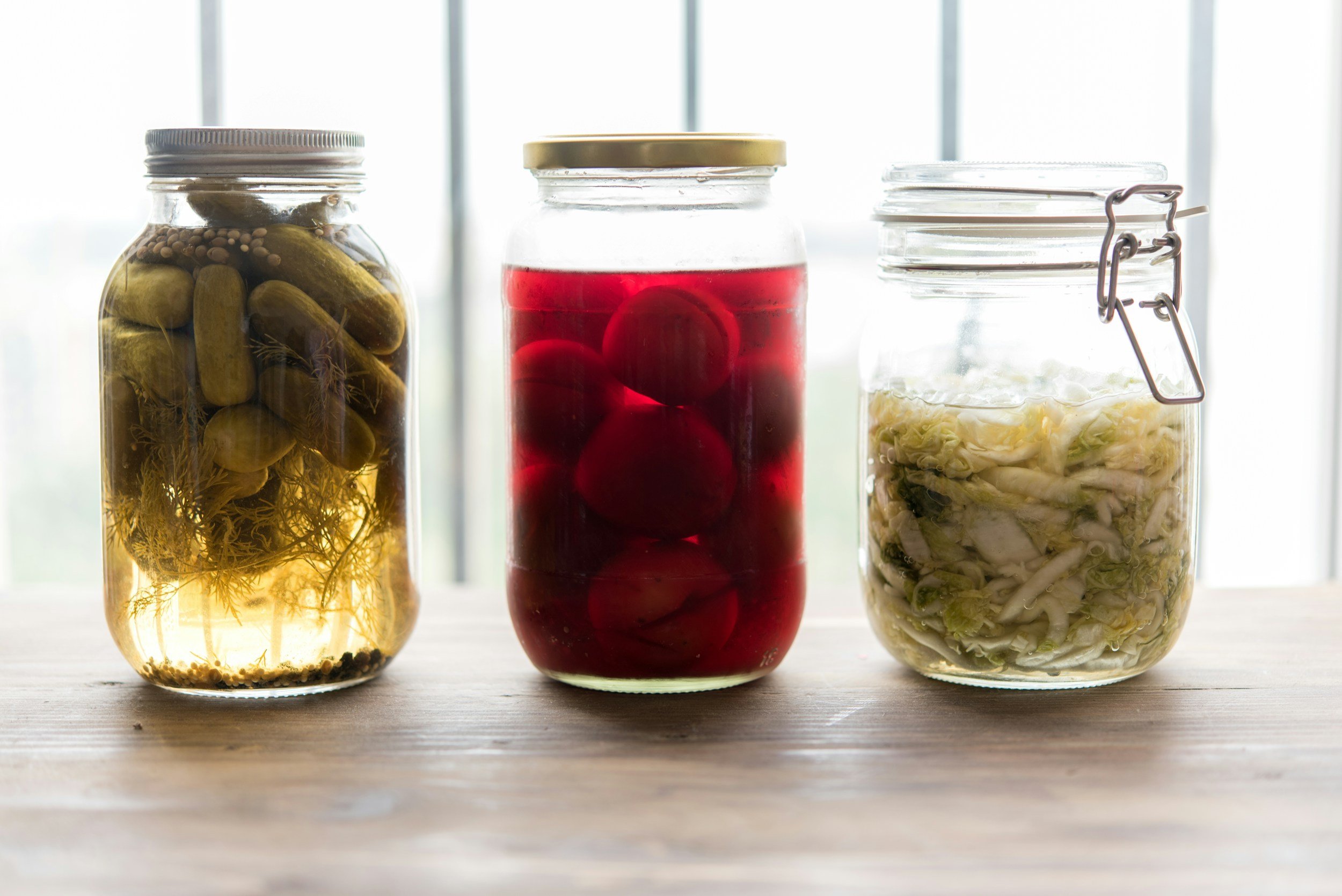
→ Swap: smaller batch cooking, quick-cook meals, freezing portions immediatelyFermented foods (sauerkraut, kombucha, yogurt, kefir)
Great for some, too activating for her at certain times.
→ Swap: blended Coconut cream made fresh with a little honey, and blueberriesAged or slow-cooked proteins
(Pulled meats, crockpot meals, shredded leftovers.)
→ Swap: fresh grilled, baked, or pan-cooked proteinsAvocado
Healthy fats, but a histamine liberator for some.
→ Swap: olive oil, coconut oil, ghee, or seeds she tolerated wellDairy
This is a hard one for some
→ Swap: Cocnut milk or no additives almond milk
Cytokines, Prostaglandins, and the Headache Cycle
ok,if you really want to nerd out with me for a moment…
The nervous system doesn’t operate in isolation.
Neither does the immune system.
And for sensitive kids, the communication between the two can be very loud.
Cytokines and prostaglandins are immune messengers. They’re released when the body perceives stress, not just infection, but physiological stress.
That stress can come from:
illness
inflammation
nervous system overload
energy depletion
gut irritation
Once released, these messengers don’t just stay in the immune lane. They interact with:
blood vessels (changing flow and pressure)
pain pathways
the limbic system (emotion and threat perception)
the autonomic nervous system
For a sensitive nervous system, this can create an amplification loop
Nervous system activation → immune signaling → increased sensitivity → lower pain threshold → headache → more nervous system activation.
Once I understood that loop, the cyclical nature of her headaches finally made sense.
This also helped explain why her headaches showed up every 8–14 days
This wasn’t an “avoid one thing and you’re fine” situation.
This was:
cumulative load
recovery time
how quickly her system could reset
If her nervous system didn’t fully recover before the next stressor, the bucket filled faster the next time.
so finally i understood Why Triggers Alone Never Told the Full Story
Triggers don’t cause headaches.
Triggers reveal capacity limits.
Screens didn’t “cause” her migraines.
Excitement didn’t “cause” them.
Food didn’t “cause” them.
They simply asked more of a system that was already working hard

Where we are now
soooo, understanding this web of nervous system, immune signaling, histamine, energy demand was empowering to get answers, but it was also… a lot 😮💨
Dont hesitate to find a provider that can navigate this all with you!
What we are incorprating. The goal here is to stabilize so that the modalities we are including can work
We temporarily added H1/H2 stabilizers. Yes they are not holistic. no this is not forever, and its honestly been so helpful.
Zyrtec (cetirizine)
Pepcid (famotidine)
These both have helped with stabilizing histamine signaling and reduced the amplitude of some headache cycles
We also explored testing. Not everyone needs these, but they helped us understand her direction,
Heres the tests we found most helpful
OAT (Organic Acids Test) — energy, neurotransmitters, metabolic patterns
NeuroZoomer — immune reactivity patterns in the nervous system
HTMA — mineral status and stress response
Bioresonance — as an additional lens, not a standalone answer!
And I want to say this clearly…
👉 You do not need to do all of this to help your child.
👉 Testing is only useful when it informs calm, mindful action, not overwhelm.
For us, these tools helped confirm patterns we were already seeing and gave us confidence in the direction we were heading.
What We Support Daily
This is not a “magic stack,” and it’s definitely not something I’d suggest copying blindly.
This is simply what her body responded to, based on her patterns, testing, and feedback over time.
I share this because parents often ask what daily support can look like
Riboflavin (B2)
This was one of the biggest needle-movers for us. Riboflavin is well-studied in migraine patterns and supports mitochondrial energy production — which matters when headaches seem to follow fatigue, overstimulation, or recovery after illness.
Magnesium (varied forms)
We’ve rotated forms over time depending on tolerance and need , topical, glycinate. Magnesium supports vascular tone, nervous system regulation, muscle relaxation, and stress response.
CoQ10
Another mitochondrial support that pairs beautifully with B2. Helpful for kids whose headaches follow exertion, illness recovery, or long days.
Phosphatidylcholine (PC) – small dose
We use this gently to support cell membranes, nervous system signaling, and overall brain resilience. This is very individualized, less is more here. Heres the one we love and use
Fish Oil (rotated)
We rotate between:
SPMs great during higher inflammation seasons. We like resolivn from bodybio
Nordic Naturals. Find in my wellness dispensary
Buffered Vitamin C
Helpful for immune modulation and mast cell stability, but always watching tolerance.
Again, this is not a universal recommendation. It’s simply what her system tolerates and benefits from right now.
Top Herbs/nutrients studied for headaches 👇
Riboflavin (B2)
Turmeric
Pyridoxine (B6)
Feverfew
Lemon Balm
Magnesium
White Willow
Ginger
Boswellia
Important note:
Just because an herb is “natural” doesn’t mean it’s always appropriate, especially in kids with sensitive nervous systems or histamine-related patterns. Some herbs calm inflammation, others can unintentionally push detox or immune signaling too hard.
This is where context matters and working with someone can be helpful
Two kids can have “headaches” and need entirely different support.
One might be:
dehydrated
mineral-deficient
under-fueling
Another might be:
neurologically sensitive
immune-reactive
recovering from chronic load
Same symptom. Very different physiology.
That’s why I always come back to:
patterns
timing
nervous system cues
recovery windows
Something New Coming Soon
And because my kids are my greatest teachers, they have inspired this recent NEW PRODUCT DROPPING SOON!
One thing that kept coming up for my daughter was vascular tone — headaches that can be tied to nervous system activation, stress, and rapid shifts in circulation.
Because of that, I created a new blend for the shop called Vascular Calm, inspired directly by what I wished we had earlier on in this journey.
It’s designed to:
support gentle vascular regulation
calm over-reactive signaling
work with the nervous system and not flare her.
If that resonates with you, make sure you’re signed up for the newsletter — that’s where I’ll share when it drops with more info!
Whew, whos still here?! 😅
Let me leave you with this…
This journey taught me something I wish more parents heard sooner:
You don’t need to fix your child.
You need to listen to their physiology.
Headaches are rarely random.
But they’re also rarely one-dimensional.
If this blog helps you feel less alone, less panicked, or more confident in your next step, then it’s done its job.
And if you’re earlier in the journey?
Start simple.
Support foundations.
Trust that clarity comes in layers.
You’re doing better than you think.