
How to Read Symptoms: What Fevers, Coughs, and Colds Are Really Telling You
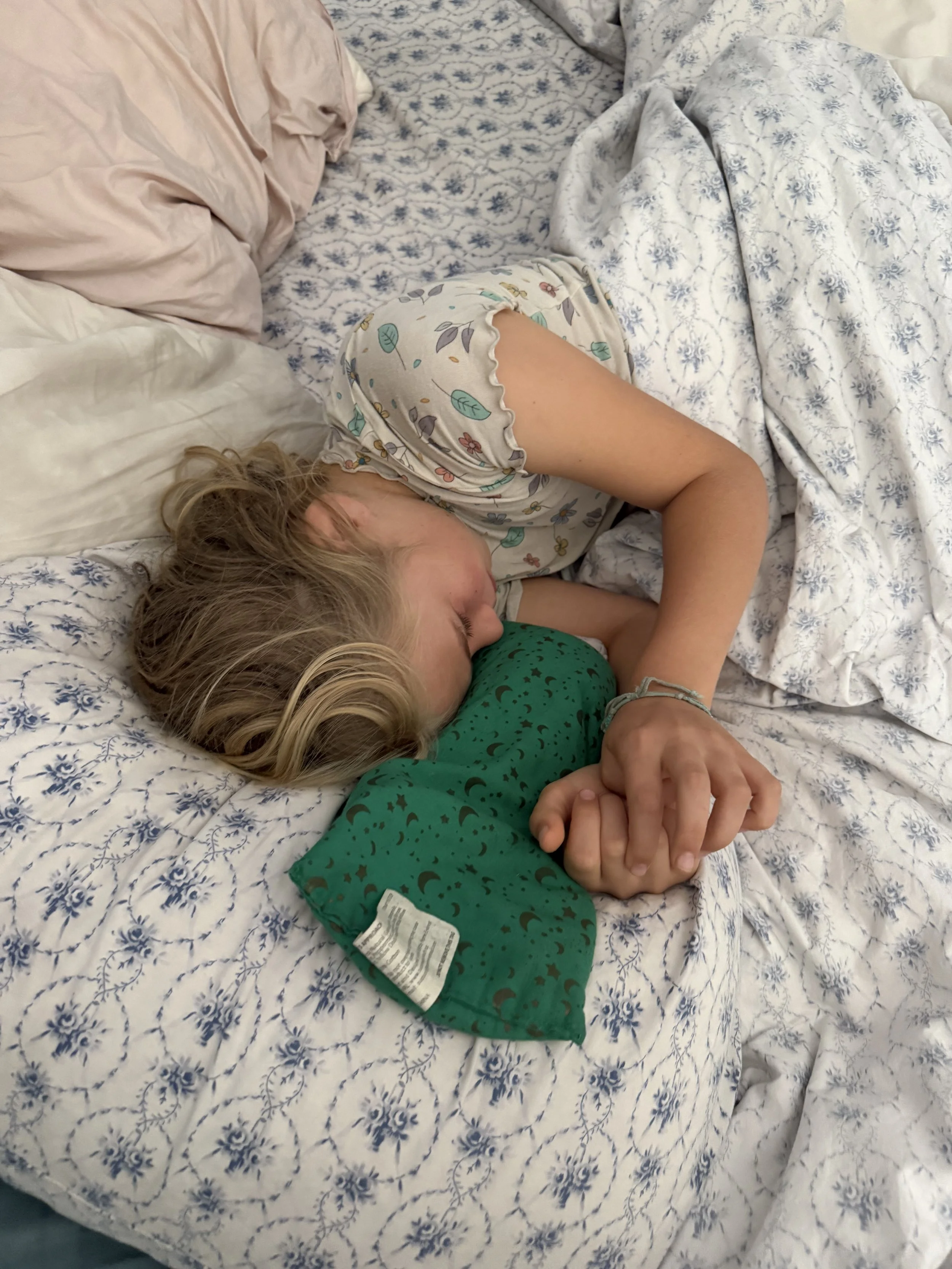
Supporting the Process (Not Just the Symptom)
Most of us grew up in a symptom-first culture:
Fever? Bring it down.
Cough? Stop it.
Mucus? Dry it up.But here’s the truth I learned after 14 years in acute pediatrics:
When we constantly try to shut symptoms off, we often shut off the body’s momentum too.
A cough appearing doesn’t always mean it’s “getting worse” — it often means the body is mobilizing.
A runny nose dripping onto everything is not a sign they’re sicker — it means lymph is moving and the immune system is flushing.
There is a time and place for intervention, but most parents were never taught how to recognize a productive symptom vs. a struggling system.
So you’re left listening to 100 opinions, Googling contradictory advice, and feeling like every choice is a gamble.
The Difference Between a Productive Symptom and a Struggling System
We often assume symptoms = danger.
But in pediatrics, the real question is whether the symptom is moving the child forward or whether the child is getting stuck.
A productive symptom is one the body is using on purpose.
A struggling system is one asking for support.
Here’s how to tell the difference:
Productive Symptoms (Healthy, though uncomfortable)
These show the body has momentum and is organizing the response:
Fever that rises and falls (not stuck high or low)
A cough that becomes more moist or more efficient
A runny nose that shifts from clear → cloudy → draining
A child who is tired but still responsive and comforted by you
Skin flushing, sweating, or warmth during fever
Brief appetite dip but normal thirst
Struggling System Signs
These indicate a “stall out” — the body is trying but not progressing:
A fever that stops rising but the child looks worse
A barky cough with no change for 48–72 hours
Congestion that never drains
Shallow breathing or retractions
A child too fatigued to interact
Dry lips, dry mouth, refusal to drink
Pain that intensifies instead of comes-and-goes
The pattern of a symptom matters more than the number on the thermometer or how loud the cough sounds.

So, Lets Chat About What Symptoms Are Actually Doing Inside the Body
Most kids cycle through the same handful of symptoms over and over in childhood, fever, coughs, congestion, fatigue, runny noses.
And yet… no one ever teaches parents what these symptoms mean.
So instead of seeing them as purposeful processes, we often panic, suppress, or assume the worst. Once you understand why the body does these things, you’ll start to see illness less like a crisis and more like a coordinated healing strategy.
Fever: The Immune Accelerator
What it does physiologically:
Speeds white blood cell production
Triggers heat-shock proteins for healing
Makes the environment less friendly to viruses
Organizes the immune response
What parents misinterpret:
“That number means my kid is really sick.”
Often, it means the immune system is efficient.
Runny Nose: The Lymphatic Drainage System
What it’s doing:
Clearing pathogens through mucus
Moving lymph
Removing cellular debris
Keeping nasal passages hydrated
Color changes tell you the stage, not severity:
Clear = mobilizing
Cloudy = immune cells showing up
Yellow/green = clean-up phase
What parents often think:
“Green means infection.”
No — green means the immune system is working.
Cough: The Respiratory Pump
What it’s doing:
Hydrating and moving mucus
Clearing airway debris
Signaling lymph + immune communication
Preventing stagnation in the respiratory tract
Types you’ll see:
Dry cough: needs moisture
Barky cough: needs warm steam + airway support
Wet cough: means clearing is happening
What parents often think:
“The cough sounds worse.”
But often, a more productive cough will sound louder or deeper — because it’s finally effective.
Fatigue: The Reset Button
What it’s doing:
Redirecting energy toward tissue repair
Lowering metabolic output so immune work can increase
Supporting hormone + nervous system recalibration
The sign most parents miss:
A child falling asleep after a fever spike or a good remedy is not worsening —
it’s the body entering restoration mode.

How to Tell What Your Child’s Symptoms Actually Need
Once you understand what symptoms are doing in the body, the next step is figuring out:
“Do I let this run its course?
Do I support it?
Or do I need someone to take a look?”
This is the part that usually creates the most stress for parents — because no one ever taught us how to read symptoms beyond “fever = bad” or “cough = worsening.”
But in reality, most symptoms fall into three usually recognizable patterns, and learning them helps you make calmer, clearer decisions in the moment.
Think of it this way:
Some symptoms show the body is doing exactly what it should.
Some show the body could use a little backup.
And some show the body is working too hard and needs extra eyes.
Let’s break those down👇
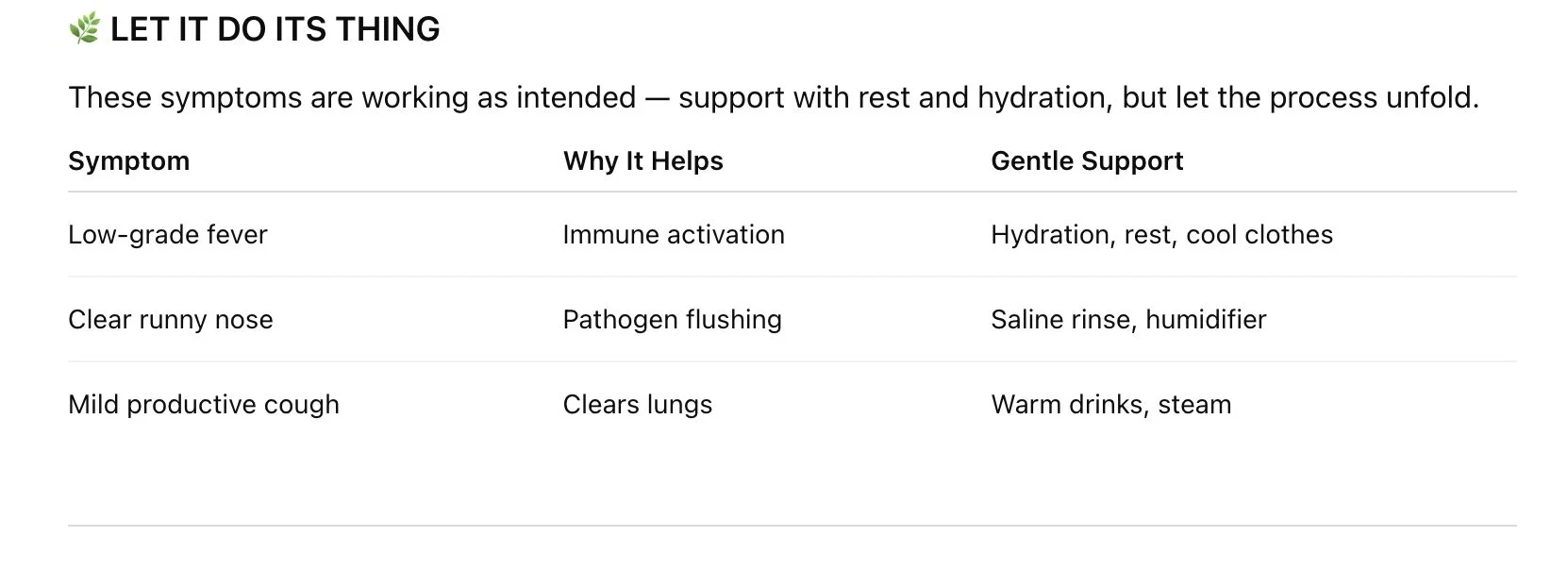
Honorable mentions in this phase: homeopathy and cell salts. These tools work beautifully here because they support the body’s own momentum — helping regulate inflammation, guide drainage, and ease discomfort without suppressing symptoms or slowing the immune response. This is also where combo remedies, like our Acute Kit, are especially helpful. When symptoms overlap or you’re not sure exactly what’s driving them, these blends support the overall pattern so you don’t have to pinpoint the perfect single remedy.
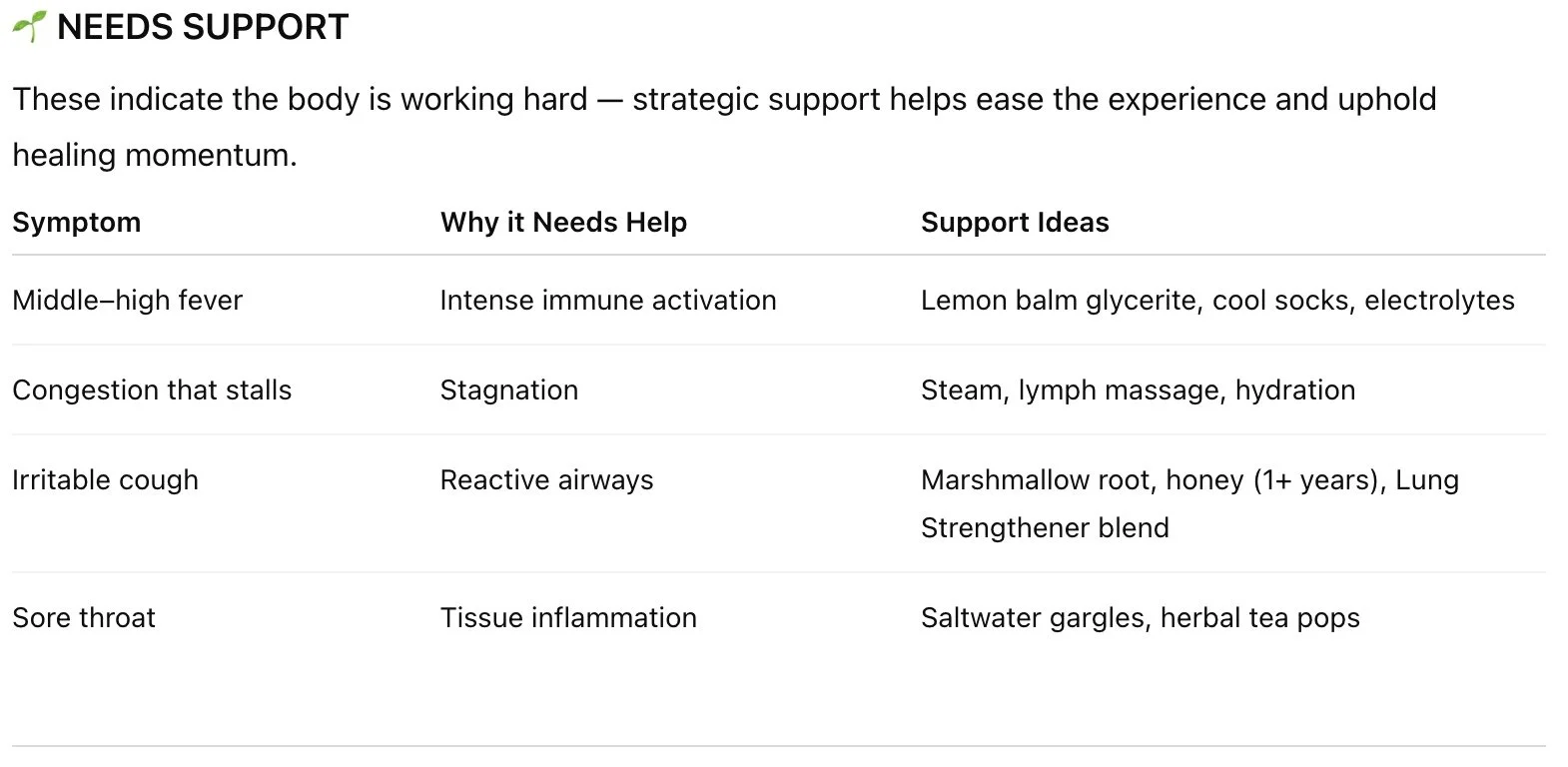
This is typically when more specific supports shine — herbs that thin mucus or calm inflammation, homeopathics matched to the child’s symptom picture, or nebulizing for airway moisture. These modalities don’t override the immune response; they optimize it, helping the body do its job with more ease.
I have an entire library of posts saved on Instagram — and my Confidently Crunchy Guide walks through the most commonly used herbs, homeopathics, and supportive tools for each type of illness.
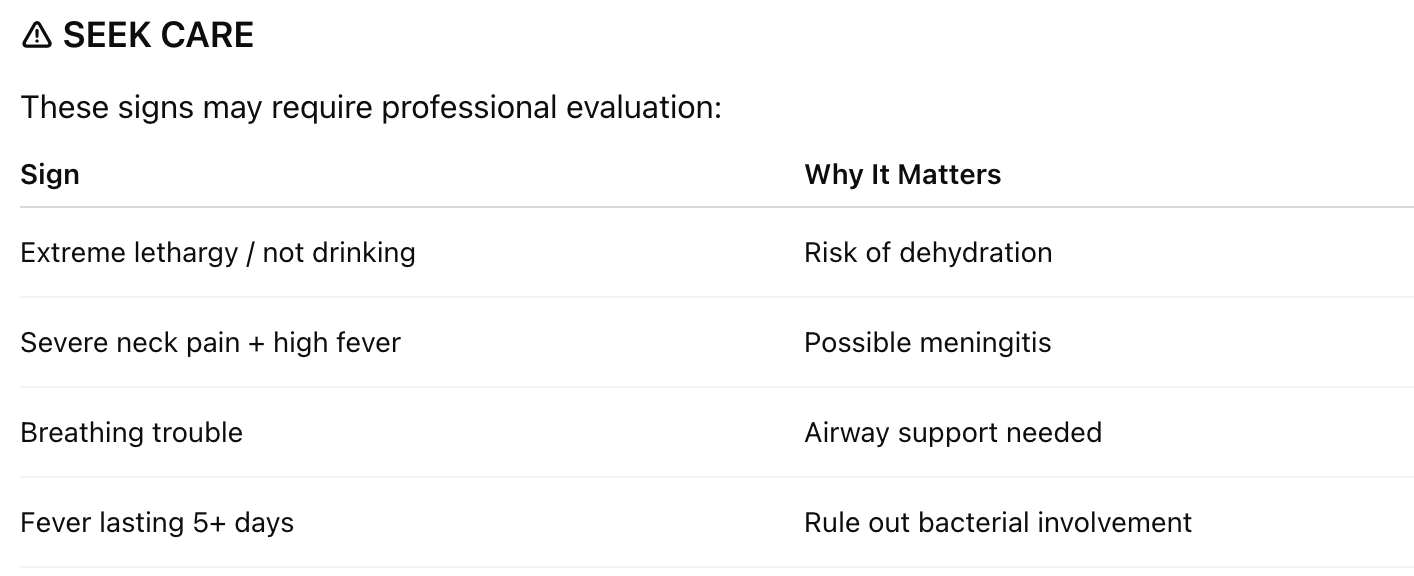
Being “confidently crunchy” doesn’t mean doing everything at home or avoiding conventional medicine at all costs. It means knowing your tools, trusting your intuition, and also recognizing when another layer of support is needed.
There is absolutely a time and place for allopathic medicine — and it can be life-saving, stabilizing, and incredibly supportive when the body is working harder than it should.
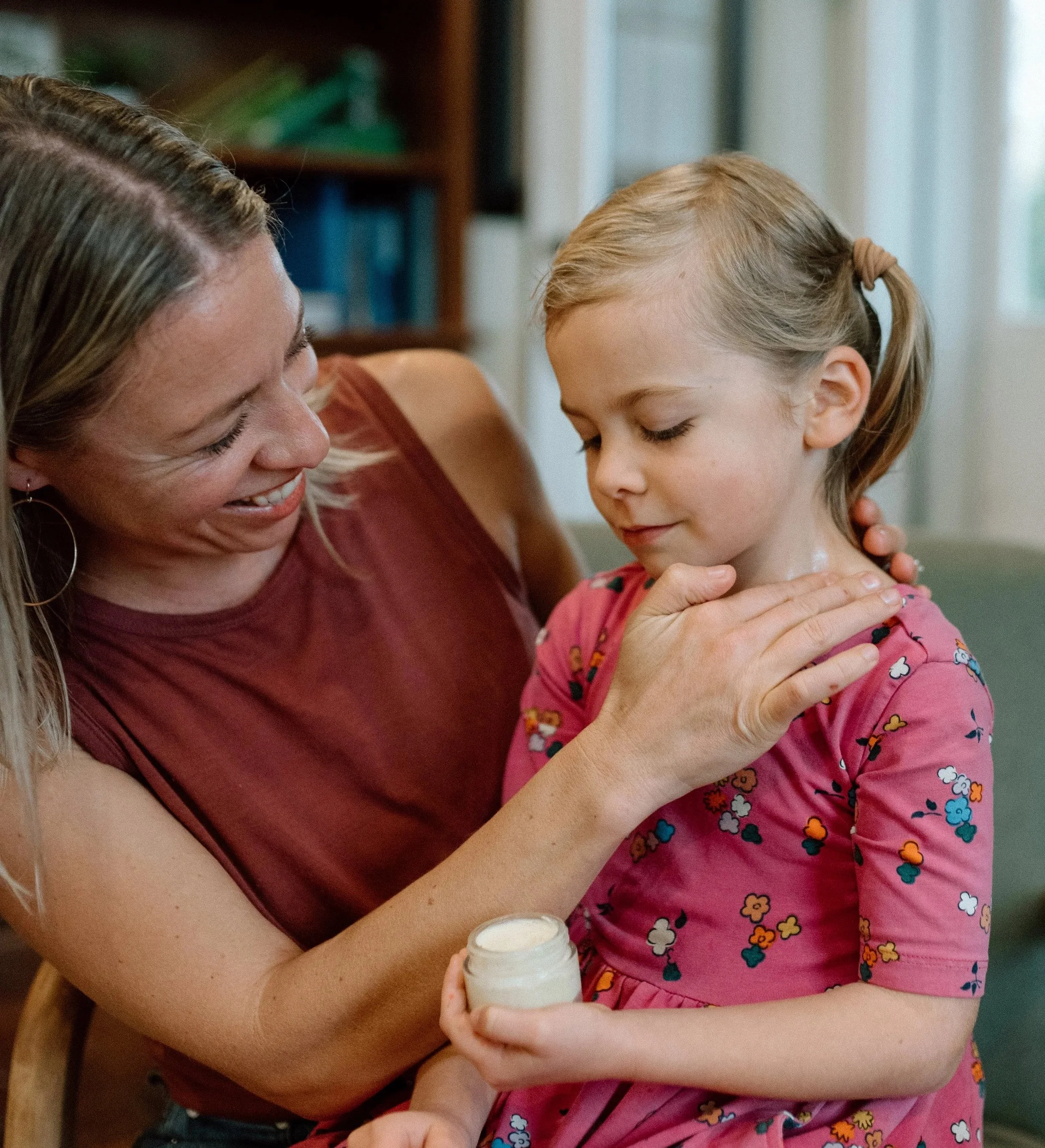
Supporting the Body as It Completes the Illness Cycle
Most families think of illness as something to “get over,” but physiologically, it’s much more than that.
Illness is often a cleansing process — a chance for the body to clear out what doesn’t belong and recalibrate systems that have been stressed, inflamed, or overworked.
A child might look better once the fever breaks or the cough softens, but inside, there is still a tremendous amount happening:
Immune cells are clearing out dead pathogens
Lymphatic channels are draining leftover debris
The gut microbiome is rebalancing after inflammation
Hormones and neurotransmitters are stabilizing
The nervous system is shifting from “fight” back to “rest”
Detox pathways are sweeping out metabolic waste
This “after-phase” is what many people miss — and why kids often fall into the pattern of back-to-back sickness all winter.
Not because their immune system is weak, but because their illness cycle was interrupted before it finished.
Illness as Cleansing — What’s Actually Happening?
1. Fevers burn off waste + speed repair
As the fever rises and falls, the body is literally breaking down viral proteins, clearing toxins, repairing tissues, and tightening immune memory.
This heat-driven process continues after the visible fever is gone.
2. Mucus carries out debris
The runny nose or lingering cough isn’t the illness “hanging on” — it’s the body moving waste out, layer by layer.
Stopping this drainage too early can trap the very debris the body is trying to release.
3. Fatigue forces a reset
The days of tiredness afterward are not regression — they’re recalibration.
The nervous system shifts from high output to deep restorative mode, and the immune system stores information for next time.
4. Appetite changes protect the gut
The gut carries 70% of the immune system.
When kids don’t want heavy foods right away, it’s because their digestive fire is still low and their body is prioritizing repair over digestion — which is wise.
5. Emotional sensitivity signals nervous system healing
Clinginess, irritability, or big emotions post-illness are not behavior problems — they’re signs the nervous system is unwinding from the stress of being sick.
All of this is cleansing.
All of this is purposeful.
And all of this deserves space to finish.
How We Help the Body Complete This Cycle (So They Come Out Stronger)
1. Keep life slow for 48–72 hours after symptoms fade
This gives the immune, lymphatic, and nervous systems time to finish their work.
Early bedtime
Gentle routines
Limited sugar + dairy (they can re-thicken mucus and suppress immune cells)
No big physical output yet
2. Support drainage + circulation
Think: move it out, don’t shut it down.
Warm baths
Lymph brushing
Hydration + electrolytes
Herbal teas (chamomile, lemon balm, ginger)
3. Nourish before stimulating
Start with foods that are easy to digest:
Broths
Soups
Stewed fruit
Simple proteins
Warm foods over raw
4. Rebuild the gut + minerals
Illness uses enormous mineral and microbiome resources.
Replenishing helps prevent that “sick again next week” cycle.
Mineral drops
Electrolytes
Probiotic-rich foods
Plenty of water + trace minerals
5. Take emotional cues seriously
A child’s mood post-illness often reflects nervous system load, not misbehavior.
Extra connection
Predictable rhythms
Slower transitions
Lots of cuddles
This is true healing — the part that doesn’t show up on a symptom chart.
If you want more guidance on how to walk your child through this phase:
My Instagram has an entire post dedicated to completing an illness cycle with specific practices and supports:
👉 https://www.instagram.com/p/DFJNZwZSqjf/

Reminder Parents…
Children who complete the full cycle of illness, without rushing the process or suppressing every symptom — actually come out stronger, more resilient, and better regulated.
Illness isn’t the body breaking.
It’s the body cleansing, learning, reorganizing, and strengthening.
When we give it space to finish the job, we set our kids up for long-term wellness ❤️